Statues - Hither & Thither |
Site Search:
|
|
Enger
Lkr. Herford Nordrhein-Westfalen Barmeierplatz |
WidukindbrunnenWidukind FountainWidukind or Wittekind, Germanic leader of the Saxons and the chief opponent of the Frankish king Charlemagne during the Saxon Wars from 777 to 785(Wikipedia) |
Eberhard Hellinge
1995 |
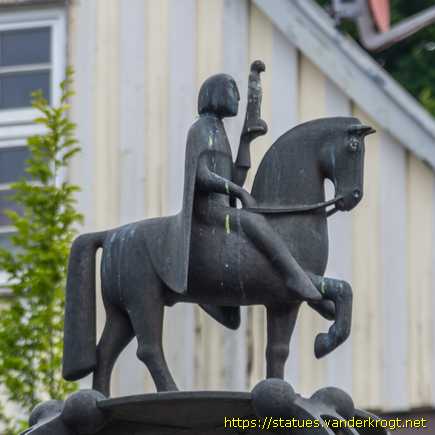
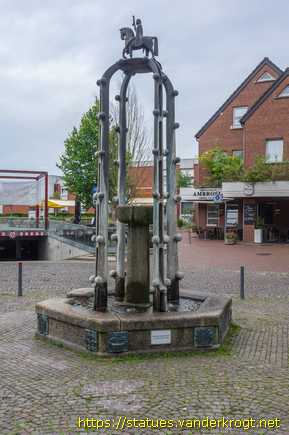
The fountain with a an equestrian statue of Widukind with a falcon on his way to Attigny for his baptism.
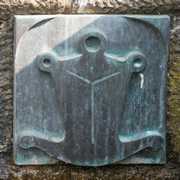
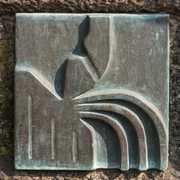
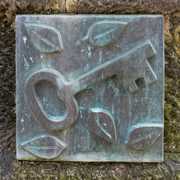
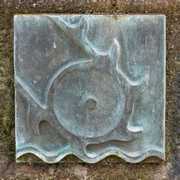
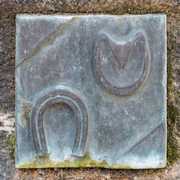
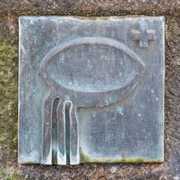
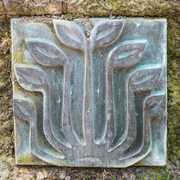
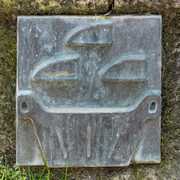
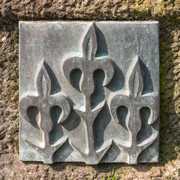
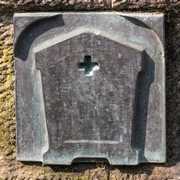
At the sides of the hexagonal fountain basin are ten bronze tablet showing some of the Widukind myths.
 |
 |
 |
 |
 |
 |
 |
 |
 |
 |
Der Widukindbrunnen
Dieser Brunnen symbolisiert das Sachsentum zwischen Götterglaube und Christentum. Die sprudelnde Stein säule verweist auf die sagenhafte Irminsul, das Heiligtum der Sachsen. Die emporstrebenden Säulen symbolisieren eine Knospenkrone, die an die um 895 in Enger geborene Königin Mathilde, Ehefrau Heinrich I., Nachfahrin Widukinds und Gründerin des Dionysiusstiftes in Enger erinnern soll. Oben auf der Krone befindet sich eine zeitgemäße Darstellung des Sachsenherzogs Widukind. 10 Bronzetafeln an den Seiten des Beckens zeigen einige der zahlreichen Widukind-Sagen. Bronzeguss 1995 Eberhard Hellinge.
Translation
Widukind Fountain
This fountain symbolises Saxonism between paganism and Christianity. The bubbling stone column refers to the legendary Irminsul, the sanctuary of the Saxons. The soaring columns symbolise a crown of buds, which is intended to commemorate Queen Mathilde, wife of Henry I, descendant of Widukind and founder of the Dionysius monastery in Enger, who was born in Enger around 895. At the top of the crown is a contemporary depiction of Widukind, Duke of Saxony. 10 bronze plaques on the sides of the basin show some of the numerous Widukind legends. Bronze casting 1995 Eberhard Hellinge.

Your banner here? Click for information.